২৯/১/২০২৬
শেয়ার করুন:
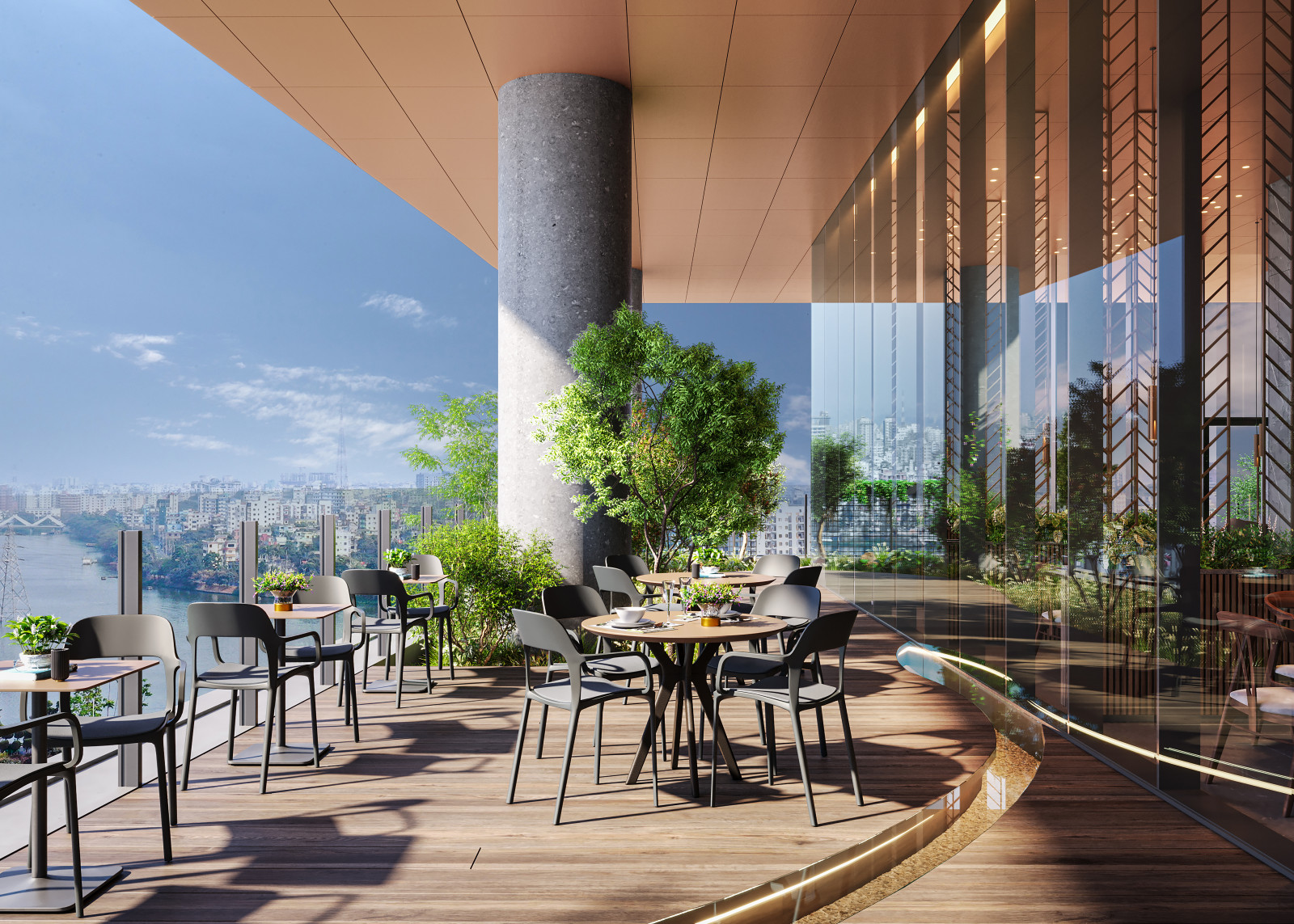
A 30-storey tall building is set to stand in Tejgaon, Dhaka's budding business district. It will consist of a swimming pool on the rooftop, a roof garden and a restaurant. The building will also have observation decks and viewing platforms and an optimised facade design for people to enjoy a panoramic view of the Hatirjheel lake.
Built by construction firm Nirman, the building proves its namesake. Mirai, which is the Japanese word for 'future', aims to bring the industry into the future with its futuristic design, technological innovation and aesthetics.
Nirman, founded by Bangladeshi cricket pioneer KZ Islam (Kamal Ziaul Islam), has been constructing quality buildings for 40 years that have stood the test of time. Islam has become a household name in the country for his contributions to Bangladeshi cricket as the president of the Bangladesh Cricket Board.
But he was a true visionary who wore multiple hats. Before he ventured into the world of cricket, Islam had founded real estate development company Nirman in 1976.
Nirman built four of Bangladesh's tallest buildings, including the Bangladesh Bank Building in Motijheel in 1985. Islam has also made a name for his company overseas, being contracted to build multiple buildings in the United Arab Emirates in the 1980s, when no other Bangladeshi company had received such honour.
Now, four decades later, Islam's son Rahat Kamal has picked up where his father left off, carrying his legacy forward through the construction of Nirman's most ambitious project yet: Mirai.
Nirman is a word that means 'to build' in Bangla. But according to Rahat, Nirman's motto was always 'to build better'. Taking that commandment seriously, Rahat has taken up the task of constructing a building that will not only stand out in Bangladesh, but will be recognised according to global standards.
Mirai is set to be completed in the summer of 2027.
"We are using modern technology to ensure that we are going to finish on time. Normally it would take six to seven years, but we are doing it in four. Satisfying our clients is our utmost priority," said Rahat.
With five basement parking floors, spacious office floors, and a unique design focusing on technology and sustainability, Mirai plans to leave an indelible mark on the city's skyline.
The firm hired Finnish architectural firm ARCO, which focuses on sustainability, to design the building. Mirva Viitanen, director of Nirman, said, "We wanted the building to feel and look like the future, taking the industry forward not just locally, but globally as well."

You can meet and work in a place with stunning views out over the Hatirjheel lake.
Technological innovation that blends safety, aesthetics and sustainability
At the forefront of what makes this ambitious project possible is building information modelling (BIM) technology. BIM is an intelligent 3D modelling tool that creates and manages fully accurate and interactable digital representations of physical structures.
"With BIM, everything you want to know about the building is already on the computer, fully realised before one brick has been laid," Rahat explained how BIM's powerful digital rendition of the planned building changes the game. He goes on to state that a building takes years of advanced planning, but with BIM they now have a digital twin, making it much easier to find sticking points and correct them quickly.
Nirman understood the importance of pre-planning and foresight. Their commitment to efficiency and determination to ensure the project is completed on schedule led them to utilise BIM for their building.
To illustrate the crucial role BIM plays in the creation of the building, Rahat provided a simple example, "In Bangladesh, the norm is to build a structure first and then think about installing plumbing and or piping. So, if they find that there is a wall where the plumbing has to go through, they then have to break the wall. This increases both the time and cost of the project.
"However, with BIM, we can foresee such a problem even before we start building, allowing us to work around it, saving both our time and the client's time and money."
While most firms still rely on 2D drawings, BIM can provide 3D models much faster, allowing access to whatever information is required, such as the length of pipes, the size of floors, or the weight of concrete.
"BIM has not yet been adopted by many companies even globally, due to inertia. It is difficult to get out of the conventional mindset," Rahat said.
Planning out everything in advance also increases the safety of the building. The machines required to build the structure have many criteria for operation, requiring specific sizes an